When your own car is stuck in the body shop after an accident, an insurance replacement rental car keeps you driving while repairs drag on. Whether insurance actually pays for that rental, and how much, comes down to rental reimbursement coverage, your daily and total policy limits, and who was at fault. Here is how the coverage works, how direct billing operates, and what still lands on you.
Quick Answer
Insurance pays for a replacement rental car when your policy includes rental reimbursement coverage or the at-fault driver’s insurer accepts liability for your loss of use. The covered portion is usually direct-billed to the insurer, capped at a daily and total limit; everything beyond those caps is yours to pay.
- Rental reimbursement is an optional add-on on most US auto policies; it is not included automatically, even on “full coverage.”
- Coverage pays up to a daily dollar limit and a total cap: an amount per day for a set number of days.
- Most insurers set up direct billing with a partner rental company, so the covered portion is invoiced straight to the insurer.
- You still pay fuel, upgrades, optional counter protection products, anything above your daily limit, and usually a small refundable deposit.
- The coverage applies only while your car is being repaired for a covered claim, not for routine maintenance or a mechanical breakdown.
Last Checked
This guide was last checked on July 12, 2026. Policies vary by company, location, and rental terms, so confirm your own agreement.
What Rental Reimbursement Coverage Actually Pays For
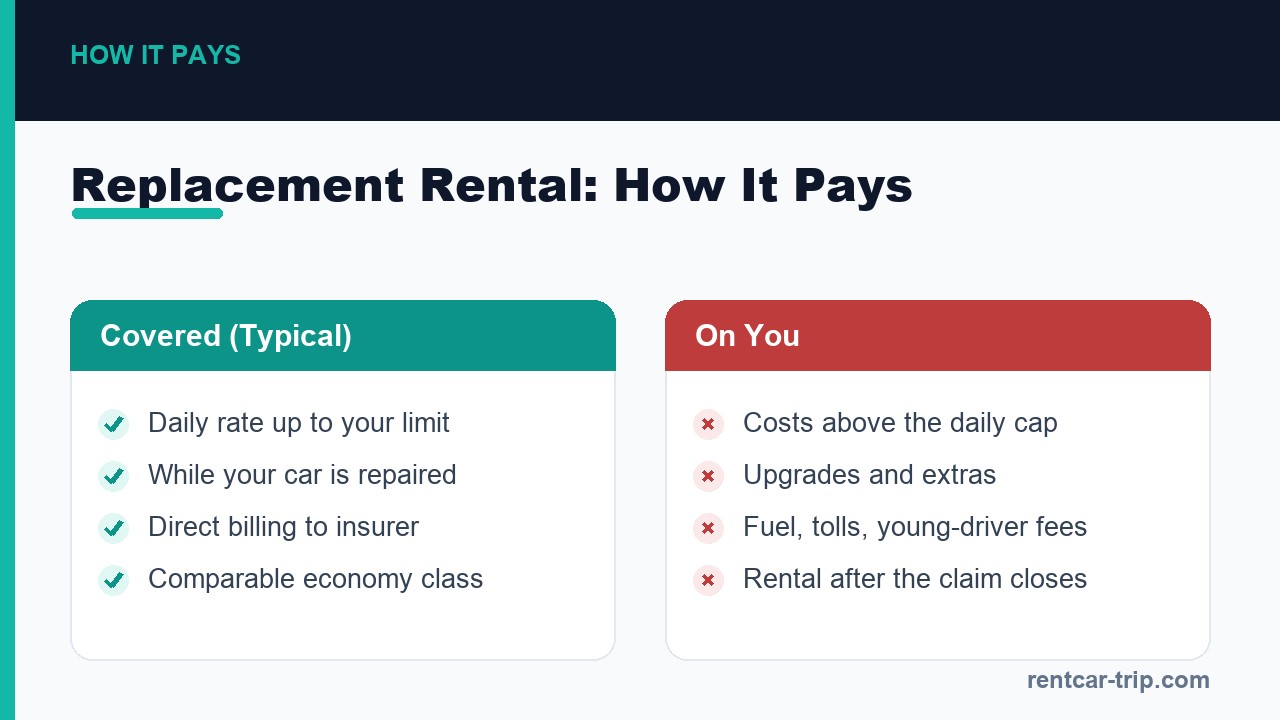
Rental reimbursement coverage (some insurers call it transportation expense coverage) is an optional endorsement you add to your auto policy for a small extra premium. It kicks in when your vehicle is out of service because of a claim covered by your collision or comprehensive coverage: an accident, theft, vandalism, or similar insured loss. According to the Insurance Information Institute, the average car spends about two weeks in the repair shop after an accident, which is exactly the gap this coverage is designed to fill.
It will not pay for a rental during routine maintenance or a mechanical breakdown, and it only pays if the underlying damage claim is approved.
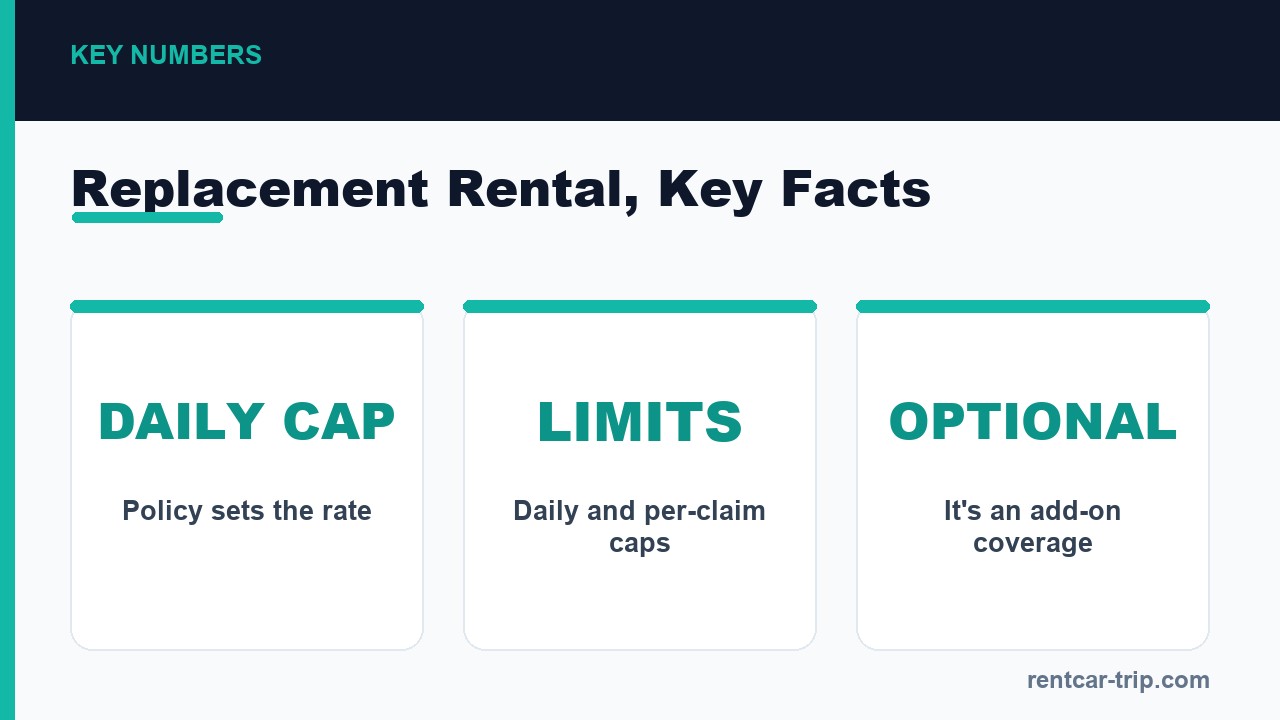
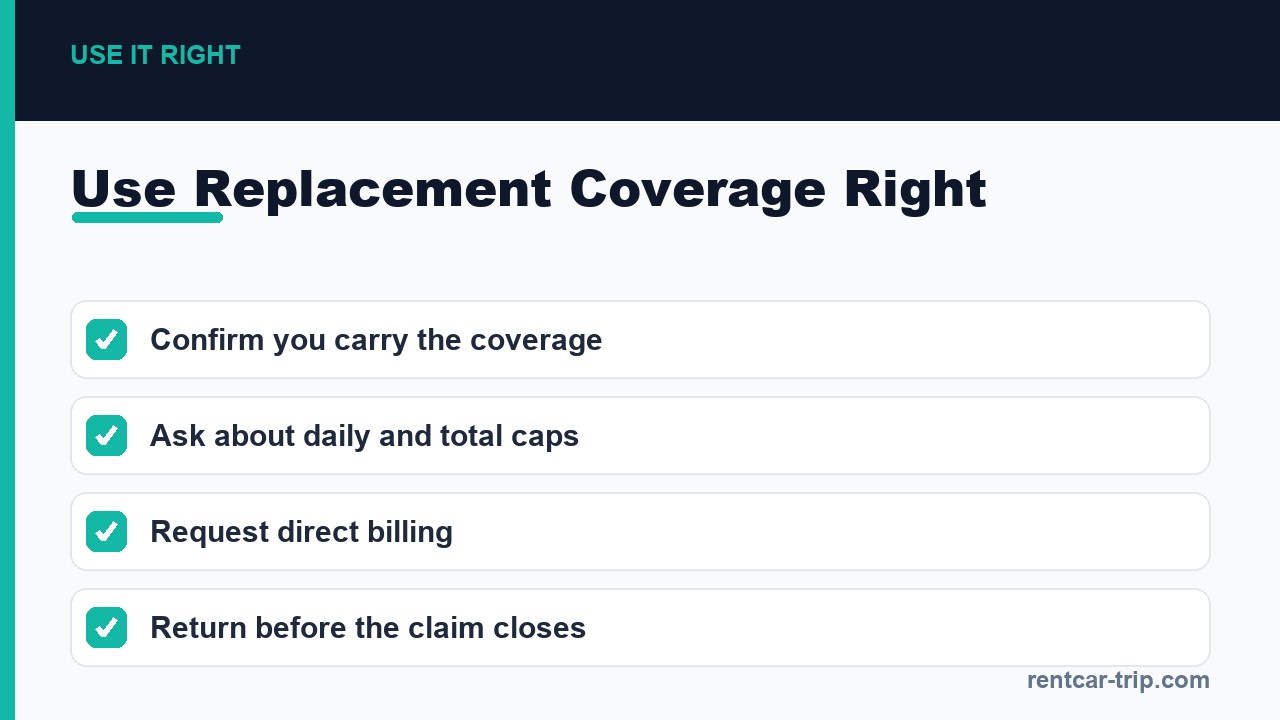
Limits are the part most drivers misread. Policies typically state both a daily limit and a total limit, so a policy might pay a set amount per day for up to 30 days, whichever runs out first. Your daily limit caps what insurance pays each day; anything above it, including taxes and fees on the overage, comes out of your pocket. Insurers generally pay for a modest, comparable vehicle class, so ask your adjuster what class your limit realistically covers before pickup.
Direct Billing: How the Rental Actually Gets Paid
On most US claims you never front the full rental cost. Major rental companies, with Enterprise the best-known name in insurance replacement rentals, maintain direct billing arrangements with most large insurers. With direct billing, the rental company invoices your insurer for the covered portion of the rental, and you only pay for extras, overages, and a deposit at the counter. Enterprise notes that with direct billing in place the deposit is typically small, often around 50 dollars, though amounts vary by location.
The typical sequence looks like this:
- File the claim and tell the adjuster you need a replacement vehicle.
- The insurer confirms your coverage, or accepts liability if you were not at fault, and authorizes a daily rate with its partner company.
- The adjuster or claims system creates the reservation, often at a branch near the body shop, and billing details go straight to the insurer.
- You pick up the car with your license and a card for the deposit, drive during the repair, and return the car when the shop releases your vehicle.
If the other driver was at fault, their liability insurer should ultimately pay for your replacement rental as part of your loss-of-use damages, but that payment is not guaranteed until the insurer actually accepts fault. The Insurance Information Institute warns that even in a clear not-at-fault accident, you may wait while the other company investigates. If you carry your own rental reimbursement coverage, you can rent immediately under your policy and let your insurer pursue the at-fault carrier for repayment.
What Insurance Pays vs. What You Still Pay
Even a fully covered replacement rental leaves some charges on your side of the counter:
| Charge | Who typically pays | Notes |
|---|---|---|
| Base daily rate up to your daily limit | Insurer | Direct-billed on most claims at negotiated insurance rates |
| Amount above your daily limit | You | Choosing a bigger class than your limit covers means paying the difference every day |
| Fuel | You | Return with the same fuel level you received to avoid refueling fees |
| Optional protection products (CDW/LDW and similar) | You | Your own auto policy usually extends to the replacement rental; verify before buying |
| Refundable deposit | You, temporarily | Often modest when direct billing is in place; varies by branch |
| Extra days after repairs finish or limits run out | You | Days past the authorized period bill to your card at the counter rate |
One more point on protection products: in most cases the collision, comprehensive, and liability coverage on your own policy carries over to a replacement rental, so you rarely need to buy the counter waiver twice. Confirm that with your insurer before declining, though, because if you damage the replacement rental you will typically owe your own deductible.
Common Mistakes To Avoid
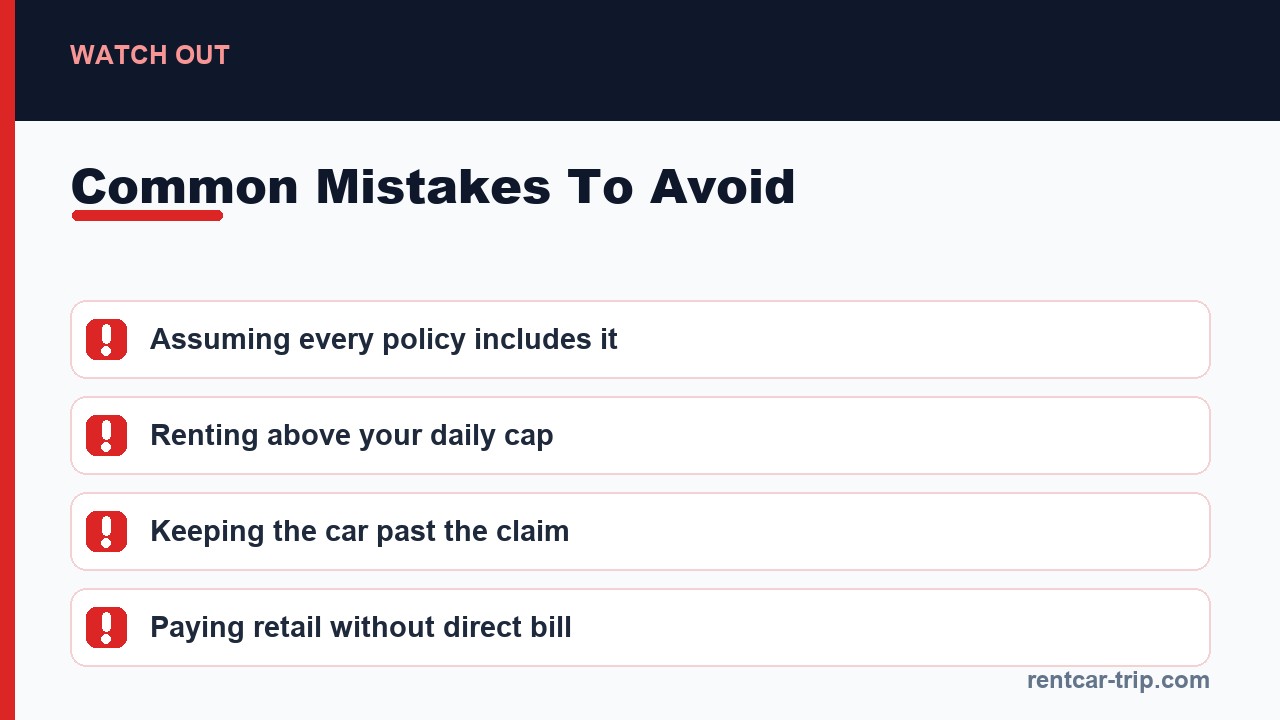
- Assuming “full coverage” includes a rental. Rental reimbursement is a separate optional add-on; if you never added it, your own policy has no rental benefit.
- Renting a class above your daily limit. The overage, plus its taxes, bills to you every single day of a multi-week repair.
- Keeping the car after the shop finishes. Insurers typically stop paying once repairs are complete, or shortly after a total-loss settlement offer, and extra days hit your card at standard rates.
- Buying counter coverage you may not need. Your own policy usually follows you into the replacement rental; ask your adjuster before paying for CDW or LDW again.
- Waiting on the at-fault insurer with no backup plan. Liability acceptance can take days or weeks, while your own rental reimbursement coverage gets you a car immediately.
Frequently Asked Questions
Is rental reimbursement included in a standard auto policy?
No. On most US policies it is an optional add-on you must select, usually for a small extra premium. The Insurance Information Institute notes many drivers skip it while chasing the cheapest quote, then discover after an accident that no rental benefit exists. Check your declarations page for a rental reimbursement or transportation expense line.
How long will insurance pay for my replacement rental?
Until your car’s repairs are complete or your total limit runs out, whichever comes first. Policies cap the benefit with a daily dollar limit plus a maximum number of days or total dollar amount. If your vehicle is declared a total loss, insurers generally end rental coverage shortly after making a settlement offer, so line up your next car quickly.
What if the other driver was at fault?
Their liability insurer should pay for your replacement rental as part of your loss-of-use damages, but only after accepting fault, and that investigation can take days or weeks. If you carry your own rental reimbursement coverage, use it immediately and let your insurer recover the cost from the at-fault carrier instead of waiting without a car.
Do I need to buy insurance on an insurance replacement rental?
Usually not, because the coverage on your own auto policy typically extends to a replacement rental you drive while your car is repaired. Confirm this with your insurer before declining the counter waiver, since your deductible still applies if you damage the rental. Drivers carrying only minimal liability coverage may still want the rental company’s protection products.
What will I actually pay at the rental counter?
Plan on a refundable deposit, fuel, and any extras you choose, plus the daily difference if your chosen car class costs more than your limit. When the insurer has direct billing in place the deposit is often small; Enterprise describes a modest deposit as typical on direct-billed claims, though amounts vary by branch. Bring your license and a card.
Can I choose any rental company I want?
Often yes, but staying inside your insurer’s partner network makes the process far smoother. Partner companies bill the insurer directly at pre-negotiated rates, while an outside rental usually means paying upfront and filing receipts for reimbursement up to your policy limits. Ask your adjuster which companies offer direct billing on your claim before booking.
Official and Primary Sources Used
- Insurance Information Institute: Does auto insurance cover a rental replacement car after an accident? – supports the optional add-on status, the two-week average repair time, and the wait risk on at-fault claims.
- Enterprise Rent-A-Car: Rent a Car After an Accident – supports the claim-to-reservation process insurers use to arrange replacement rentals.
- Enterprise Rent-A-Car: Who Pays for a Rental Car After an Accident – supports direct billing, daily and total policy limits, and the typically small deposit on direct-billed claims.
- FTC Consumer Advice: Renting a Car – supports general guidance on rental fees, optional charges, and total costs.