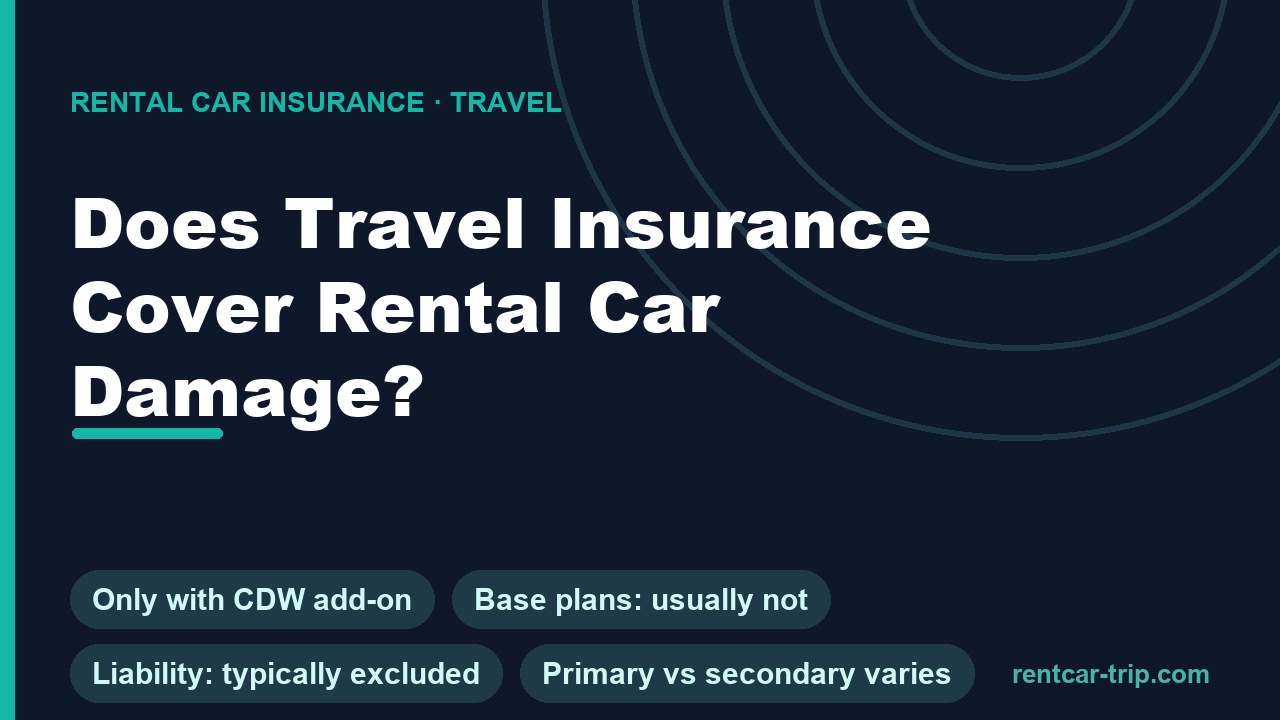
Booking a trip and wondering whether the policy you bought will pay if you scratch, dent, or total the rental car. The honest answer is: it depends on which benefit you actually selected. Does travel insurance cover rental car damage? Sometimes, but only when your plan includes a specific rental collision or CDW add-on, not by default.
Quick Answer
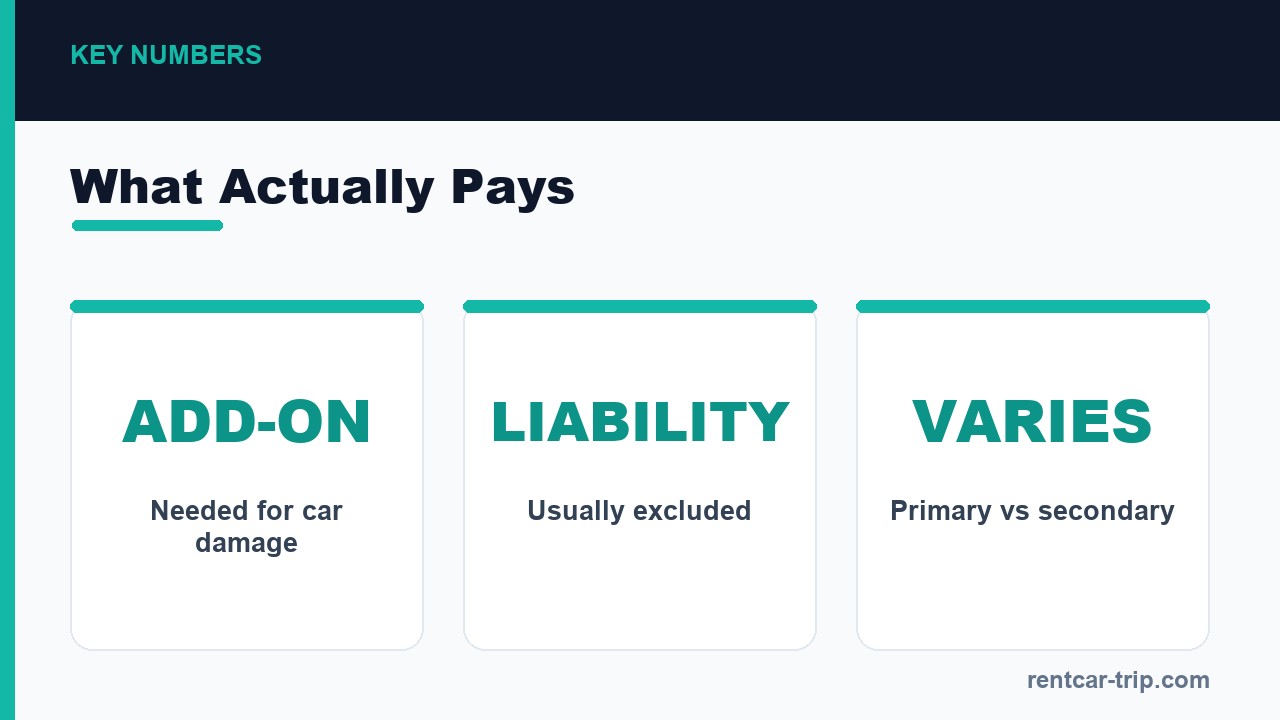
Usually only if you added the optional rental car collision/CDW benefit to your travel insurance. A standard trip-cancellation policy without that add-on typically pays nothing toward physical damage to the rental vehicle, and travel insurance almost never covers liability for harm you cause to others.
- The rental damage benefit is an optional rider you must elect and pay for, not an automatic part of every travel policy.
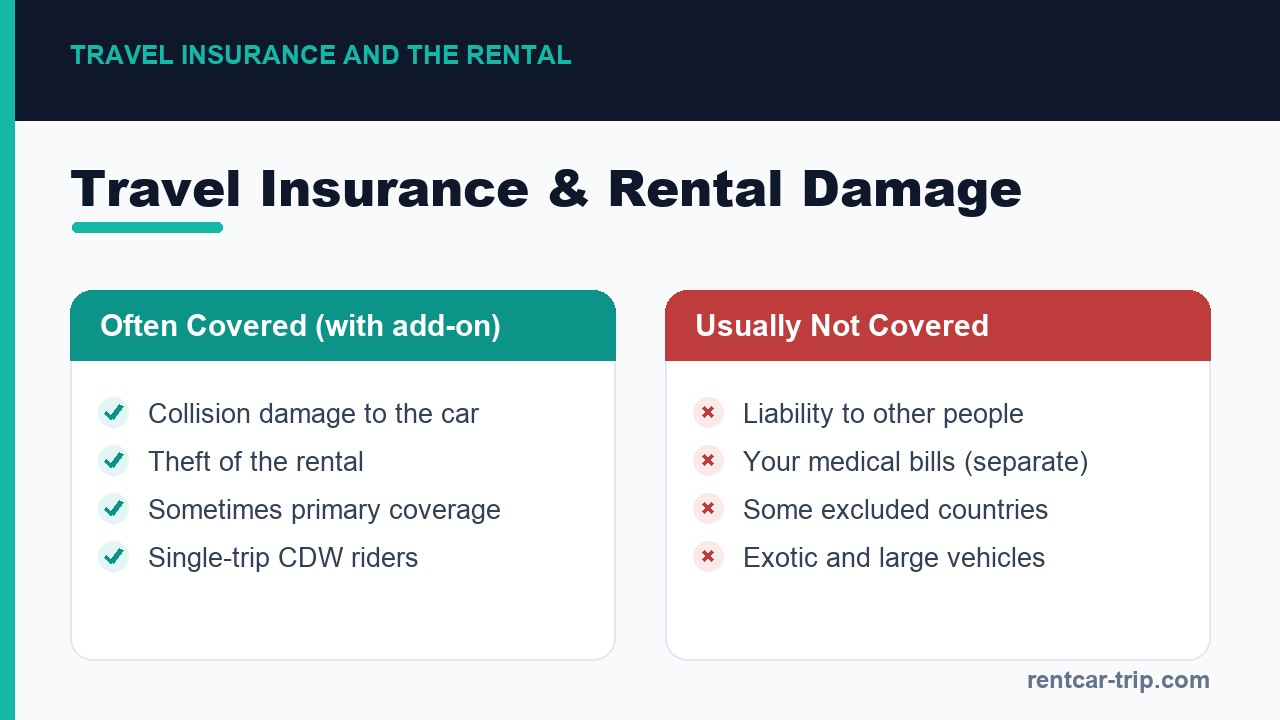
- When included, it reimburses collision damage, theft, vandalism, and weather damage to the rental car, up to a stated limit.
- It does not cover liability for injuring people or damaging their property, and it does not cover your medical bills.
- Exotic, luxury, large, and off-road vehicles are commonly excluded, and you must report incidents promptly to qualify.
- Check your credit card and personal auto policy first, because you may already have overlapping rental car protection.
Last Checked
This guide was last checked on June 28, 2026. Coverage varies by policy, card, provider, country, and rental terms, so confirm your own documents.
How Travel Insurance Handles Rental Car Damage
Most comprehensive travel insurance plans are built around trip cancellation, interruption, delay, baggage, and emergency medical coverage. Physical damage to a rental car is a separate concern, and it is typically sold as an add-on often labeled “rental car damage,” “rental collision,” or a CDW-style benefit. If you did not select that option when you bought the plan, your base policy generally will not reimburse a dent or fender bender.
When the benefit is included, it works as reimbursement insurance rather than a true waiver. The rental company can still charge your card for the damage, and your travel insurer then pays you back for eligible repair costs up to the policy limit. Travel insurance rental coverage tends to be broader than a counter CDW in scope because it bundles in trip protection, but it carries its own caps, deductibles, and vehicle restrictions. Always confirm the exact dollar limit, because a low cap can leave you exposed on an expensive repair.
One detail trips travelers up constantly: travel insurance rental damage benefits cover the car itself, never your liability to others. If you injure a pedestrian or crush another vehicle, that is third-party liability, which this benefit does not touch.
What Each Coverage Type Pays For
It helps to see how travel insurance compares with the other tools you might already carry. The table below is a general guide; your actual terms control.
| Coverage source | Damage to your rental car | Liability to others | Your medical bills | Typical catch |
|---|---|---|---|---|
| Travel insurance (with rental/CDW add-on) | Often yes, up to a limit | Usually no | Only via a separate medical benefit | Must be elected; vehicle and country exclusions apply |
| Travel insurance (base plan, no add-on) | Usually no | No | Emergency medical benefit may apply | Rental damage simply is not included |
| Credit card rental benefit | Often yes (collision/theft) | No | No | Usually secondary; decline counter CDW; exclusions apply |
| Rental counter CDW/LDW | Yes, often with deductible | No (liability sold separately) | No | Most expensive per day |
| Personal auto policy | If you carry collision/comprehensive | Yes, per your limits | Per your med-pay/PIP | Often does not extend abroad |
Notice that no single line item covers everything. Travel insurance and credit cards both focus on damage to the rental vehicle and almost always skip liability and medical. That gap is the single biggest reason travelers get surprised.
The Gaps and Exclusions To Check Before You Rely On It
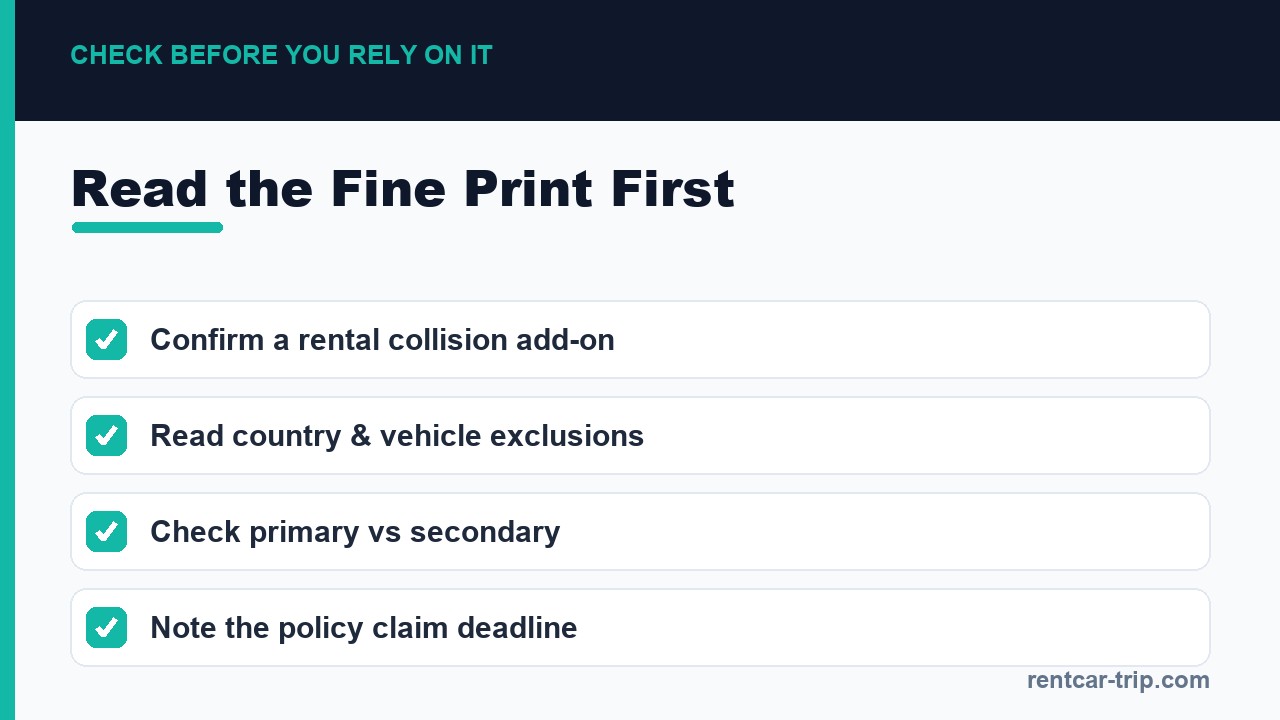
Even a travel policy with a rental damage rider has fine print that can void a claim. Read these sections before you sign the rental agreement, not after a crash.
- Liability is excluded. Damage to other people, their cars, or their property is not part of the rental damage benefit, so price out separate liability if your auto policy will not extend.
- Vehicle type limits. Exotic, luxury, antique, large passenger vans, trucks, campers, RVs, motorcycles, and off-road vehicles are commonly excluded.
- Country and use restrictions. Some plans exclude certain countries or off-pavement driving, and violating the rental contract can void coverage entirely.
- Reporting rules. You typically must report theft or an accident to police and the rental company promptly, or the claim can be denied.
- Limits and deductibles. A per-claim cap that is lower than the car’s value leaves you paying the difference out of pocket.
Common Mistakes To Avoid
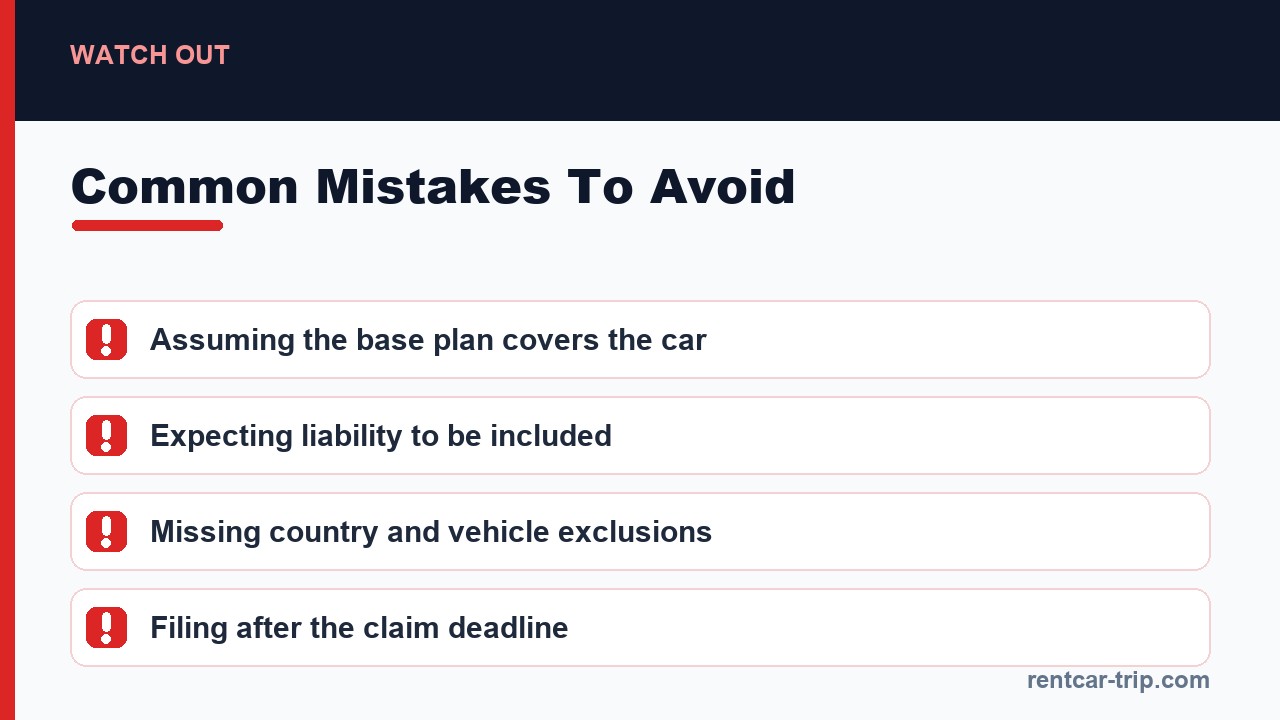
- Assuming any travel policy covers the car. Confirm in writing that your specific plan includes the rental damage/CDW benefit before you count on it.
- Confusing damage coverage with liability. Paying for rental damage protection does nothing for injuries or property damage you cause to others.
- Ignoring overlap. Your credit card or personal auto policy may already cover rental damage, so paying again can be wasted money.
- Stacking coverage the wrong way. If a credit card benefit is secondary, you may have to file with your auto insurer first, which can affect your rates.
- Skipping the photo and police steps. Failing to document damage or report an incident promptly is a leading reason claims get denied.
- Not checking the country list. A plan that works in Spain may exclude the exact country you are driving in, so verify before departure.
Named Travel-Insurance Rental-Car Products Compared
Generic advice rarely names the actual products, so here is how three widely sold United States travel-insurance rental-car benefits describe their own terms on official pages. The pattern is consistent: each is a separate product or a paid add-on, not something bundled automatically into a standard comprehensive trip plan. Coverage protects the vehicle only, so none of these replaces liability insurance for injuries or damage you cause to others.
| Product / add-on | How it is sold | Primary to your own auto policy? | Provider-stated damage limit | Deductible | Loss-of-use fees |
|---|---|---|---|---|---|
| Allianz OneTrip Rental Car Protector | Standalone per-day product (also offered as a benefit inside an AllTrips annual plan) | Yes — Allianz states it is primary | Up to $75,000 (standalone). When included in an AllTrips annual plan the limit is set separately and is not published on the plan page — confirm in your plan documents | None stated for the covered damage | Included (reasonable loss-of-use fees) |
| Travel Guard (AIG) Rental Vehicle Damage Coverage | Optional add-on on select plans, or a standalone plan | Yes — stated as primary to other insurance | $35,000 or $50,000, depending on tier selected | $250 | Included |
| Seven Corners Rental Car Damage | Optional add-on to Trip Protection Basic or Choice, for an extra premium at checkout | Not stated as primary on the plan page; Seven Corners’ general plan terms pay in excess of other valid and collectible insurance, so treat it as secondary and confirm before relying on it | Up to $35,000 (same limit on both Basic and Choice) | Not separately stated; see plan documents (the benefit can reimburse a collision deductible you are obligated to pay) | Included (counted within the repair-cost calculation) |
Pricing is also worth checking directly rather than assuming: Allianz publishes a per-calendar-day rate (about $13 per day on its official page, with some sources citing rates starting near $11), while Travel Guard describes its rental benefit as around $12 per day on average and Seven Corners quotes an added premium during enrollment. Figures, sublimits and excluded vehicle types (trucks, exotics, off-road vehicles, passenger vans and similar) can differ by state and change over time.
Why a Standard Comprehensive Plan Usually Isn’t Enough
A key takeaway that generic summaries gloss over: buying a “comprehensive” or trip-protection plan does not, by itself, pay to repair a scraped or crashed rental. On each provider’s own pages the rental-car damage benefit is a distinct product or an add-on you must actively elect and pay for — Seven Corners, for example, states you must select each option and pay the additional cost to receive that coverage. If you skip that step, collision and theft damage to the rental typically falls outside the trip plan’s core trip-cancellation, baggage and medical benefits.
Two structural points make some of these add-ons different from credit-card benefits. First, two of the three — Allianz and Travel Guard — describe themselves as primary (paying before your personal auto policy, so you avoid a claim on your own record), whereas Seven Corners does not market its benefit as primary and its general terms pay in excess of other insurance. Second, all three fold in the rental company’s loss-of-use charges that many card benefits historically disputed. Even so, every one of them excludes liability entirely, so pairing them with adequate liability protection remains essential. As of July 2026, verify current terms — limits, deductibles, per-day rates, primary-versus-excess status and eligible vehicle types are set by each insurer’s live policy documents and vary by state.
Sources verified for this section: allianztravelinsurance.com, allianztravelinsurance.com, travelguard.com, travelguard.com, sevencorners.com
Frequently Asked Questions
Does basic travel insurance automatically cover rental car damage?
Usually no. A standard travel insurance plan centered on trip cancellation, interruption, and medical care does not pay for physical damage to a rental car unless you added an optional rental collision or CDW benefit. Always check your plan documents, because the wording and availability of this add-on differ significantly between providers.
Will travel insurance cover liability if I hurt someone with the rental?
Almost never. Travel insurance rental benefits cover damage to the rental vehicle itself, not your liability for injuring other people or damaging their property. For liability you generally rely on your personal auto policy, a separate liability product, or coverage purchased from the rental company, especially when driving abroad.
Is travel insurance rental coverage primary or secondary?
It varies by plan. Some travel policies provide primary-style rental damage coverage, while others coordinate with your other coverage. Credit card rental benefits, by contrast, are usually secondary and pay after your personal auto insurance. Read the coordination-of-benefits language and confirm the order in which each source pays.
Should I still buy the rental counter CDW if I have travel insurance?
Often not, if your travel plan clearly includes rental damage coverage with an adequate limit. But buying the counter CDW can simplify a claim because the rental company waives its charge directly. Compare the limit, deductible, exclusions, and convenience before declining the counter option, particularly for high-value vehicles.
Does travel insurance cover rental cars in any country?
Not always. Many plans exclude specific countries or require that driving stays on public roads. Some destinations also mandate liability insurance you must buy locally. Verify your destination is covered and that the plan recognizes your rental contract terms before you travel, since an excluded country voids the rental damage benefit.
What should I do right after rental car damage to protect my claim?
Document everything immediately. Photograph all damage, get a police report when required, notify the rental company at once, and keep the rental agreement and repair invoices. Then contact your travel insurer or card issuer to start the claim within their deadline. Missing the reporting window or paperwork is a frequent reason claims are denied.
Official and Primary Sources Used
- Source – Insurance Information Institute on rental car insurance, secondary credit card coverage, and checking existing policies first.
- Source – FTC consumer guidance on renting a car, optional waivers, and reviewing insurance you already have.
- Source – Insurance Information Institute home for general auto and travel insurance education.