one-way car rental fees can look simple in search results, but the real decision happens in the quote details, counter terms, and return receipt. One-way rentals can save a vacation day, but the drop charge can be larger than the fuel bill. The right answer is route math, not just daily rate comparison.
Quick Answer
Pay the one-way drop fee when a different drop-off saves you a vacation day or eliminates backtracking (like a coastal point-to-point road trip or a time-sensitive business trip), and skip it when a loop route back to the original branch—even after adding a night of lodging and fuel—comes out cheaper overall. Decide it on total trip cost, since the drop fee swings with route, season, fleet needs, and the rental company rather than distance alone.
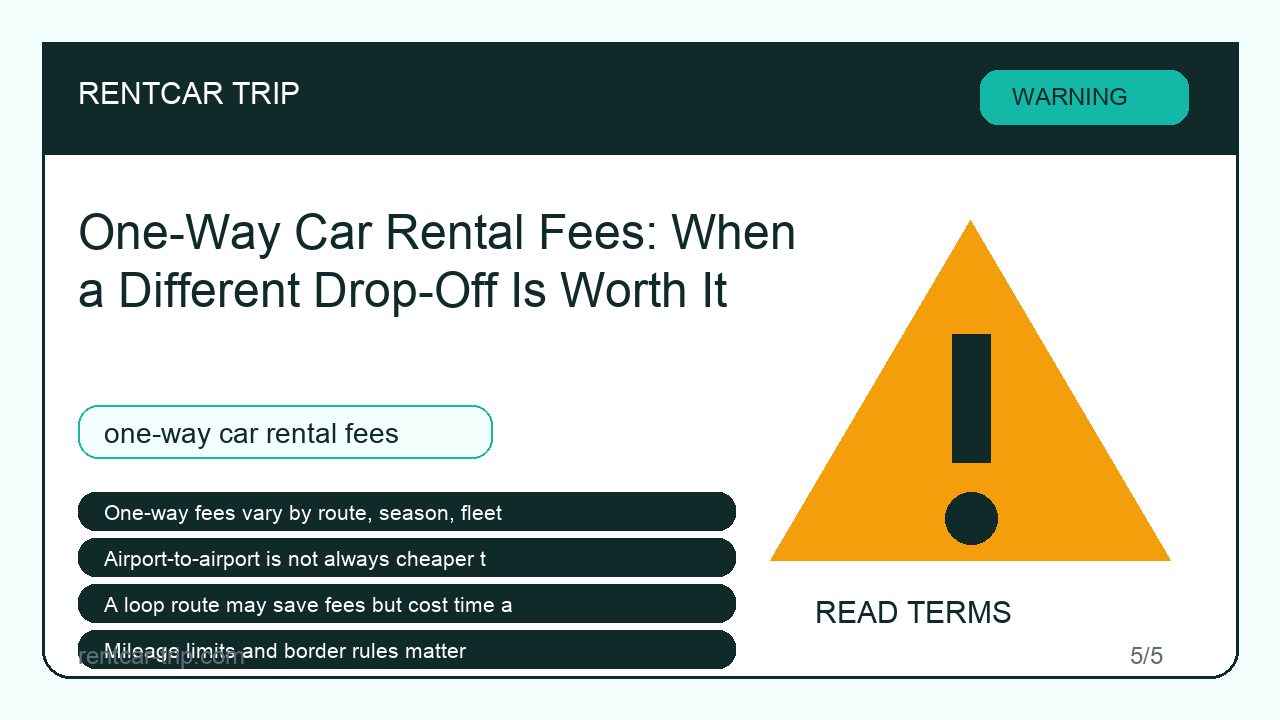
- Worth it: point-to-point trips where returning to the pickup location would force backtracking or burn a travel day—coast road trips and one-way business legs are the clearest wins, even with the drop fee or airport surcharge.
- Not worth it: when a loop route back to the original branch, plus the extra lodging, fuel, and time it costs, still totals less than the one-way drop fee—run that full comparison before booking.
- Don’t assume airport-to-airport is cheapest; airport concession and facility charges can offset the convenience, and because the fee tracks route and fleet needs, a city branch can sometimes come out lower.
- Before reserving, confirm mileage limits, fuel policy, and cross-border restrictions—exceeding the allowance or crossing a border can erase any savings the one-way gave you.
- Verify the exact drop-off branch and its operating hours; returning to a nearby-but-wrong location or after-hours can trigger penalties on top of the drop fee.
Final Check Date
This guide was last checked on June 16, 2026. Rental car rules change by location, company, vehicle class, payment card, and season, so use this as a decision checklist and confirm the final terms in your own reservation.
Why This Rental Car Topic Gets Expensive Fast
The price card shown at the start of a booking flow is usually only one layer of the rental. A traveler still has to account for location-based charges, taxes, coverage choices, fuel policy, toll products, equipment, driver rules, and deposit holds.
The pattern is predictable: the earlier you separate mandatory charges from optional products, the less pressure you feel at pickup. That is especially important at airports, after long flights, or when family luggage makes it hard to pause and read every line.
One-Way Car Rental Fees: When a Different Drop-Off Is Worth It: Cost and Decision Table
| Route | One-way benefit | Potential cost |
|---|---|---|
| Coast road trip | No backtracking | Drop fee |
| Business trip | Saves time | Airport surcharge |
| National park loop | Flexible itinerary | Lodging tradeoff |
Step-by-Step Booking Checklist
- Price the exact pickup and drop-off locations.
- Check the quote for drop charge or intercity fee.
- Compare with a loop route including fuel and hotel cost.
- Check mileage limits and state or country border rules.
- Book early if the route is popular in peak season.
What To Check Before You Click Reserve
Use the quote page like a contract preview. Look for the final estimated total, mileage rule, fuel policy, cancellation language, payment card rules, coverage products, and location-specific fees. If a page shows only the base rate, keep clicking until you see taxes and fees.
For airport rentals, compare the convenience of landing and going straight to pickup against any concession, recovery, or facility charges. For city pickup, add the cost of reaching the branch and returning to the airport or station later.
Common Mistakes To Avoid
- Comparing one-way and round-trip without valuing time.
- Ignoring drop-off location hours.
- Returning to a nearby but wrong branch.
- Missing cross-border restrictions.
Counter Script: Questions Worth Asking
- Is this item mandatory at this location, or optional?
- Does this waiver cover damage to the rental car, liability to others, or both?
- What happens if I return early, late, below fuel level, or through a toll road?
- How much is the deposit hold, and when is it released?
- Can I get the return receipt before leaving the lot?
Frequently Asked Questions
Why are one-way rental fees high?
They reflect fleet movement, route demand, and branch logistics.
Can the fee disappear?
Sometimes promotional routes or fleet needs reduce it. Always compare dates.
Is airport drop-off cheaper?
Not always. Airport fees can offset convenience.
Should I book separate one-day rentals?
Sometimes, but check mileage, pickup time, and transfer cost.
Official and Primary Sources Used
- FTC Consumer Advice: Renting a Car – Coverage options, insurance checks, fees, inspections, and final bill review.
- National Car Rental: Taxes, Surcharges and Fees – Examples of recovery fees, concession recovery fees, and facility charges.