The fastest way to compare rental cars is not the cheapest daily rate. The winner is the quote that still looks good after airport fees, fuel policy, toll products, insurance choices, extra drivers, deposits, and return timing are added.
Quick Answer
Book the quote with the lowest realistic total cost, not the lowest daily rate: the winner is the one that still looks cheapest after airport and mandatory facility fees, fuel policy, tolls, insurance, extra drivers, deposit holds, and return timing are all added in. A higher city-branch base rate can easily beat a cheap airport rate once concession and facility charges are counted.
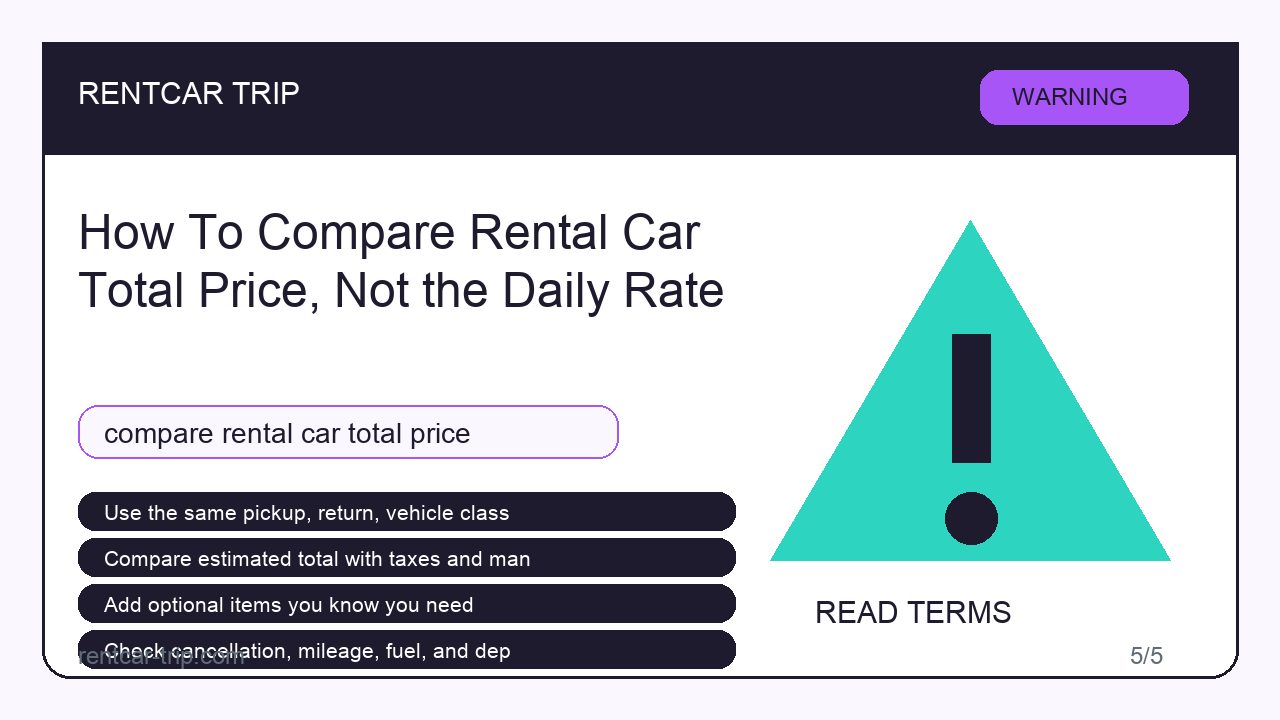
- Compare apples-to-apples: use the same pickup, return, vehicle class, and driver age across every quote, then read the full estimated total with taxes and mandatory fees, not the headline rate.
- Add up the cost drivers the daily rate hides: airport facility and concession recovery fees, fuel policy (prepaid vs. refill before return), toll products, extra-driver charges, equipment, and early/late return penalties.
- Watch the deposit hold, especially on a debit card, since a large balance requirement can rule out a quote that otherwise looks cheap.
- Save a screenshot of the better quote’s full breakdown before switching providers, then check the actual reservation terms and the final receipt against it to catch added charges or disputes.
- Avoid the common traps: don’t compare different vehicle classes, don’t ignore driver age, and watch for mileage limits, below-fuel-level penalties, cleaning charges, and forced counter upgrades.
Final Check Date
This guide was last checked on June 24, 2026. Rental car rules change by location, company, vehicle class, payment card, and season, so use this as a decision checklist and confirm the final terms in your own reservation.
How This Guide Was Built
This guide is written for travelers comparing two or more rental quotes where the cheapest daily rate does not clearly show the cheapest trip. It uses public rental policy pages, consumer-protection guidance, common rental fee categories, and practical receipt-review scenarios instead of treating the advertised daily rate as the final cost.
How to use it: compare the guidance with your exact reservation, pickup branch rules, payment card terms, and final rental agreement before paying.
Practical Receipt Audit
| Receipt Area | What To Check | Why It Matters |
|---|---|---|
| Base rate | Compare the full rental period, not one isolated day. | A weekend quote can change when airport fees and driver age are added. |
| Mandatory fees | Look for facility, concession, licensing, and local surcharge lines. | These can make a higher city-branch rate cheaper overall. |
| Optional decisions | Add only products you would actually accept. | Insurance, fuel, toll pass, and equipment should be treated as separate choices. |
Trust Checks Before You Act
- Use the same pickup time, return time, car class, and driver age for every quote.
- Save the quote total before switching tabs or mobile apps.
- Recheck the final agreement at pickup against the saved quote.
Limits of This Guide
Rental car terms can change by company, country, airport, local branch, payment card, driver age, vehicle class, and season. Treat this page as a practical decision guide, then let the current reservation terms and written pickup agreement control the final choice.
Real-World Answer
The fastest way to compare rental cars is not the cheapest daily rate. The winner is the quote that still looks good after airport fees, fuel policy, toll products, insurance choices, extra drivers, deposits, and return timing are added.
Bottom line: Pick the rental with the lowest realistic total cost, not the lowest headline price.
Decision Matrix for This Trip
| Situation | What It Usually Means | Best Move |
|---|---|---|
| Airport short trip | Use airport pickup only if the time saved beats facility and concession fees. | Compare one nearby city branch before booking. |
| Family trip | Choose the car class after counting seats, strollers, and luggage. | A forced counter upgrade is usually worse than planning size early. |
| Debit card renter | Add the deposit hold to the trip budget. | A cheap quote can fail if available balance is too low. |
Real Cost Scenarios
| Scenario | Why It Changes the Price | How To Decide |
|---|---|---|
| $34/day airport quote | Looks cheap before fees. | Can lose after facility fees, toll pass, and fuel charges. |
| $41/day city quote | Higher base rate. | Can win if pickup transfer is cheap and fees are lower. |
| $49/day family-size car | Looks expensive at first. | Can win if it avoids counter upgrade and luggage stress. |
Reader Checklist Before You Book
- Write down the pickup location, return location, rental length, payment card, driver list, and vehicle class before comparing prices.
- Open the full quote breakdown and separate mandatory fees from optional products.
- Save a screenshot of the quote, then compare it with the pickup agreement and final receipt.
- Use this page as a decision aid, but let the exact reservation terms control the final choice.
How To Compare Rental Car Total Price, Not the Daily Rate: Cost and Decision Table
| Compare field | Why it matters | Example |
|---|---|---|
| Vehicle class | Different classes price differently | Compact vs SUV |
| Location | Airport fees differ | Terminal vs city branch |
| Total estimate | Closest price signal | Taxes and mandatory fees |
| Rules | Can create later cost | Mileage, fuel, cancellation |
Step-by-Step Booking Checklist
- Create one comparison row per quote.
- Use final estimated total as the main number.
- Add airport transfer, parking, toll product, and equipment.
- Check mileage and cancellation terms.
- Choose the lowest acceptable total, not the lowest headline rate.
What To Verify in the Actual Reservation
Do not stop at the search-result card. Open the full quote, payment rules, cancellation terms, mileage policy, fuel policy, coverage menu, and final estimated total before you choose.
When the final receipt arrives, compare it with the saved quote and your pickup/return photos. That comparison is where most avoidable rental car disputes become clear.
Common Mistakes To Avoid
- Comparing different car classes.
- Forgetting driver age.
- Ignoring deposit hold.
- Missing mandatory fees until payment page.
Counter Script: Questions Worth Asking
- Is this item mandatory at this location, or optional?
- Does this waiver cover damage to the rental car, liability to others, or both?
- What happens if I return early, late, below fuel level, or through a toll road?
- How much is the deposit hold, and when is it released?
- Can I get the return receipt before leaving the lot?
Try the interactive tool
Rental Car Total Cost Calculator
The advertised daily rate is rarely the final bill. Enter your quote details to see the real total, the effective per-day cost, and how much of it sits above the headline rate. Everything updates as you type.
Estimate only. Airport concession and facility surcharges, taxes, and optional-product prices vary by location and company, so confirm every line in your own quote. The default airport rate uses a typical recovery percentage as a starting point, not a quoted figure.
Frequently Asked Questions
Should I compare daily rate or total?
Total, always. Daily rate can hide taxes and fees.
What if one quote says estimated total?
Use it but still read fee and payment terms.
Should I include optional insurance?
Include it only if you plan to buy it after coverage checks.
Can screenshots help?
Yes. They help you remember terms and support disputes if price details change.
Next Rental Car Decision Checks
Use these related guides to check the parts of the rental that usually change the final cost, pickup outcome, or return receipt.
- Rental Car Hidden Fees Tourists MissA fee checklist for fuel, tolls, cleaning, late returns, deposits, airport charges, and receipt surprises.
- Prepaid Fuel vs Fuel Service ChargeCompare refill-yourself, prepaid fuel, and post-return fuel charges before accepting the counter option.
- Family Rental Car Road Trip BudgetBuild a realistic family rental budget with seats, vehicle size, fuel, tolls, parking, extra drivers, and cleanup risk.
- Rental Car Total Cost CalculatorUse the worksheet after reading a guide to add daily rate, fees, fuel, tolls, insurance, equipment, and deposit hold.
Official and Primary Sources Used
- FTC Consumer Advice: Renting a Car – Coverage options, insurance checks, fees, inspections, and final bill review.
- National Car Rental: Taxes, Surcharges and Fees – Examples of recovery fees, concession recovery fees, and facility charges.
- Avis: Fees and Taxes FAQ – Customer facility charges and local surcharge examples.